The SITE4Sustainability (S4S) team is deeply committed to knowledge sharing and ideation promotion. So welcome to our videos on our areas of interest such as Innovation (technological as well non-technological innovations such as business, policy, social innovation), Urban Sustainability, Water and Sanitation, Circular Economy, Education for sustainability, Well being and Sustainability Behaviour etc.
Site Talk 4 | Students’ Innovation Spotlight 
Usually we hear of students only when they go protesting against rules, regulations, power groups, governments etc. But the good transformative work being done by universities which have integrated education for sustainability into their curriculum or extracurricular activities is under recognized.
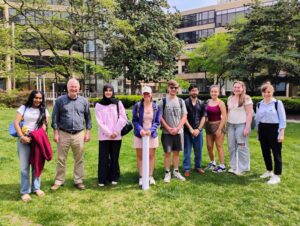
That’s why we decided in this latest episode in our SITE Talks series, to bring to you three interesting sustainability projects from The George Washington University that demonstrate the power of integrating Science, Innovation, Technology, and Engagement (SITE) to create real-world impact.
These case studies illustrate how students and teachers can design and contribute to sustainable campus development through different pathways:
·  Transforming the ecological landscape to water management and biodiversity support ;
·  Giving unused physical spaces useful functionalities for more efficient infrastructural management; and
·  Creating new educational programmes to bridge the gap between environmental goals and capital mobilization.
These presentations showcase the power of student-led research that integrates all four SITE variables. They prove that effective sustainability solutions must be scientifically rigorous, creatively innovative, technologically enabled, AND deeply engaging!
We are grateful to Prof Robert Orttung and the students at GWU! Featured student research teams are: Group 1: Amna Maqsood, Aaria Reddy, Mattisa Tollkuci, Erica Kong Group 2: Rithik Adiani, Caroline Moore, Anna Simmel Group 3: Joseph Petko, Romina Borges, Veronica Maldonaldo

Site Talk 3 | Melting Point:
The Arctic’s Role in Energy and World Politics
An insightful discussion with Prof. Robert W. Orttung, Director of the Sustainability Research Institute at George Washington University, as we explore the evolving landscape of Arctic urban sustainability. From energy transitions to governance, food systems, and waste management, Prof. Orttung highlights how Arctic communities grapple with rapid environmental changes and strive for resilience through innovative, data-driven solutions.
Site Talk 2 | From Plant to Power:
A Conversation on Cutting-Edge Biomass Research in South Korea
The Biomass & Bioenergy Laboratory is a research laboratory located at the Graduate School of International Agricultural Technology (GSIAT) in South Korea. The Biomass & Bioenergy Laboratory at GSIAT focuses on research related to the production and utilization of renewable energy from biomass. Some specific research areas may include:
– Developing and optimizing technologies for the production of biofuels and bioproducts from various types of biomass feedstocks, such as agricultural and forestry residues, energy crops, and municipal solid waste.
– Evaluating the environmental impacts of biomass production and utilization, including greenhouse gas emissions, air and water pollution, and land use changes.
– Investigating the economic and social implications of biomass-based energy systems, such as job creation, rural development, and energy security.
The laboratory also offers educational and training opportunities for students and researchers interested in biomass and bioenergy research. The ultimate goal of the laboratory’s research is to contribute to the development of sustainable, low-carbon energy systems that can help mitigate climate change and support sustainable development.
Site Talk 1 | Sustainable Livestock Farming in a Modern World:
Visit to a Research Farm in South Korea
The Department of Ecofriendly Livestock Science is a specialized academic unit within the Seoul National University Institute of Green Bioscience and Technology. Its primary focus is on promoting sustainable livestock production practices that minimize environmental impact while maximizing animal welfare and productivity. The department’s research and educational programs cover various topics, including feed and nutrition management, genetics and breeding, animal behavior and welfare, and environmental management. Through its activities, the department aims to develop innovative solutions that can help address the global challenges of feeding a growing population while reducing the environmental footprint of animal agriculture.