🌱💧 Empowering Youth Innovation at the Intersection of Fashion, Water & Social Impact
Site4Sustainability joined forces with the Singapore Fashion Council for the launch of The Bridge Fashion Innovator (TBFI) – Launch Pad, Asia’s first fashion‑focused ideathon. It’s a bold and pioneering initiative that brings together youth, creativity, and purpose to reimagine what fashion can be—for style and for positive change.
In our role as Theme Leader of the Social Impact track, we are to spotlight “Access to Water”—challenging participants to innovate to address our problem statement: “How might we drive fashion innovations that address water-related challenges—like improving access to clean water, ensuring water safety, and reducing the fashion industry’s environmental footprint on freshwater and marine ecosystems?”
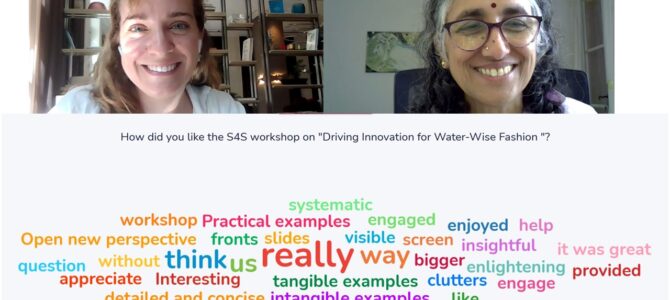
On August 18th 2025, Prof. Shyama V. Ramani and Dr. Maria Tomai conducted a workshop or Master Class for the participants on “Driving Innovation for Water-Wise Fashion”.
It had three learning objectives:
- To deepen understanding of the fashion industry’s water-related impacts in high-, middle-, and low-income country contexts.
- To build awareness about real-world solutions from governments, international organizations, businesses, and NGOs.
- To be able to apply some simple yet widely used sustainability transition frameworks.
Our interactive online workshop equipped participants to design impactful solutions that address the water-related challenges of the fashion industry. Through short presentations, quizzes, and breakout case study discussions, participants explored the industry’s impact on water access, safety, and ecosystems across high-, middle-, and low-income countries. They learnt about some widely applied sustainability transitions frameworks used to contextualise and address systemic challenges. Case studies explored real-world solutions implemented by governments, businesses, and NGOs.
Participants engaged with key questions:
🔹 Which production processes and materials exert the greatest pressure on water systems?
🔹 What forms of technological and organisational innovation can mitigate this impact?
🔹 How might niche sustainability-oriented firms influence the trajectory of mainstream fashion?
🔹 Must every niche initiative scale in order to be impactful?
The discussion underscored that innovation in fashion must go beyond materials and technology. It requires:
-
Rethinking governance and incentives within supply chains.
-
Addressing the trade-offs between consumer demand, affordability, and sustainability.
-
Fostering behavioural change among producers and consumers alike.
What emerged most clearly is that sustainability transitions in fashion—and indeed in other sectors—depend on cultivating an ecosystem of solutions: experimental niches, supportive regulation, informed consumers, and inclusive business models.
This reflection directly links to the Sustainable Development Goals (SDGs):
✅ SDG 6 (Clean Water and Sanitation): reducing water stress and safeguarding water quality.
✅ SDG 12 (Responsible Consumption and Production): rethinking resource use in fashion supply chains.
✅ SDG 13 (Climate Action): addressing emissions and resilience in water-scarce regions.
This collaboration reflects our belief that workshops can be a powerful lever for education on sustainability transitions in public health and social resilience, especially when young innovators are equipped with the tools and encouragement to design with empathy, sustainability, and systems thinking.